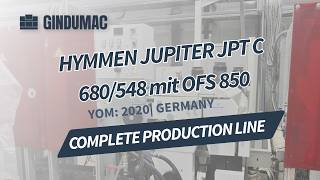
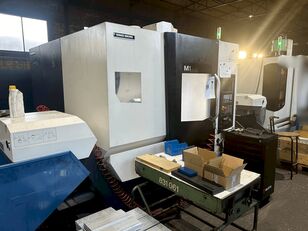
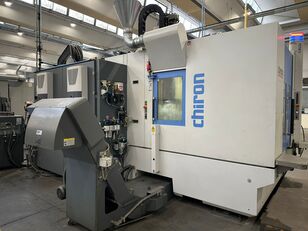
Hymmen JUPITER JPT C 680/548 mit OFS 850 machining centre




 Kaiserslautern

If you decide to buy equipment at a low price, make sure that you communicate with the real seller. Find out as much information about the owner of the equipment as possible. One way of cheating is to represent yourself as a real company. In case of suspicion, inform us about this for additional control, through the feedback form.
Before you decide to make a purchase, carefully review several sales offers to understand the average cost of your chosen equipment. If the price of the offer you like is much lower than similar offers, think about it. A significant price difference may indicate hidden defects or an attempt by the seller to commit fraudulent acts.
Do not buy products which price is too different from the average price for similar equipment.
Do not give consent to dubious pledges and prepaid goods. In case of doubt, do not be afraid to clarify details, ask for additional photographs and documents for equipment, check the authenticity of documents, ask questions.
The most common type of fraud. Unfair sellers may request a certain amount of advance payment to “book” your right to purchase equipment. Thus, fraudsters can collect a large amount and disappear, no longer get in touch.
- Transfer of prepayment to the card
- Do not make an advance payment without paperwork confirming the process of transferring money, if during the communication the seller is in doubt.
- Transfer to the “Trustee” account
- Such a request should be alarming, most likely you are communicating with a fraudster.
- Transfer to a company account with a similar name
- Be careful, fraudsters may disguise themselves as well-known companies, making minor changes to the name. Do not transfer funds if the company name is in doubt.
- Substitution of own details in the invoice of a real company
- Before making a transfer, make sure that the specified details are correct, and whether they relate to the specified company.
Seller's contacts

 +49 162 58...
+49 162 5858448
+49 162 58...
+49 162 5858448



 Germany, Kaiserslautern


 Germany, Kaiserslautern


 Germany, Kaiserslautern



 Germany, Kaiserslautern


 Germany, Kaiserslautern


 Germany, Kaiserslautern


 Germany, Kaiserslautern


 Germany, Kaiserslautern


Location: DE
Nominal width: 680 mm
Maximum printing width: 548 mm (expandable to 680 mm)
Maximum panel width in OFS: 510 mm
Working height: 900 mm (+50 mm)
Processing: printing and top coating from above, counter-coating from below
Operating mode: dual-lane up to max. 255 mm part width; otherwise single-lane
System speed: 8–65 m/min
Printing speed: up to 50 m/min
Number of colors: 4
Printheads per color: 8 (max. 10 possible)
Free slots for additional colors: 6
Printhead type: XAAR 2001
Print rows: 1
Printheads per row: 8 (max. 10 possible)
Free slots for additional rows: 1
Total printheads: 8
Thickness: 2–12 mm (no restrictions); up to 28 mm with speed limitations
Longitudinal cuts: 5
Longitudinal trimming units: 2
Minimum part width: 160 mm
Type: vacuum portal
Feeding stations: 2
Discharge positions: 1
Max feeding capacity: 8 cycles/min; with double stacking: 16 panels/min
Identical stacks per station: up to panel length 1550 mm = 2; ≥1550 mm = 1
Max stack height: 1050 mm
Max stack weight: 5000 kg (combined)
Design: without pits
Transport mode: protective plate or pallet
Protective plate (infeed): length 800–2800 mm; width 1000–1260 mm; thickness 20–30 mm (up to 150 mm for pallets); max 80 kg per plate/pallet
Stacking positions: 1
Max stacking capacity: 30 cycles/min
Identical stacks per position: up to panel length 1550 mm = 2; ≥1550 mm = 1
Protective plate feeding method: loading by forklift, separation by robot
Protective plate (stacking): length 800–2800 mm; width 1000–1200 mm; thickness 20–30 mm; max 80 kg per plate; material OSB or HDF
Number of aggregates: 35
Process steps: feeding, cutting, cleaning, infrared heating, UV curing, coating, digital printing, structuring, excimer matting, stacking
length: 600–2800 mm
width: 900–1260 mm
General system data
Jupiter digital printing unit (JPT)
DLE structure printing unit
Printhead type: XAAR 1003
Raw panel specifications
Cutting format saw
Finished panel specifications
Length: 600–2800 mm
Width: 160–510 mm
Thickness: 2–12 mm (no restrictions)
up to 28 mm with speed limitations
Feeding system (infeed)
Stacking system (outfeed)
Type: drop shaft
Max stack height: 1050 mm (alternative: 1000 mm)
Max stack weight: 5000 kg (combined) (alternative: 3500 kg)
Design: with pits
Transport mode: protective plate or pallet
Process aggregates
Application
Industrial single-pass digital printing line for high-speed surface finishing of large panels (flooring and furniture)
producing realistic wood
stone
or custom decors directly on substrates
Additional equipment
Robot for protective plate separation at outfeed (as part of protective plate handling)